If you have ever dreamed of building a stable career and a new life in one of the most livable countries in the world, Canada has just handed you an open invitation — and it comes with a paycheque. Warehouse jobs in Canada with visa sponsorship are no longer just a whisper on immigration forums; they are a full-blown opportunity backed by government programs, employer demand, and a labour market that genuinely cannot keep up with its own growth.
Here is the thing most people get wrong: they assume warehouse work is low-level, low-pay, and a dead end. That could not be further from the truth in Canada right now. Between overtime pay, shift differentials, health benefits, and career progression into supervisory or managerial roles, skilled and even entry-level warehouse workers are pulling in annual earnings of up to $65,000 or more. And the best part? Many of these employers will not just hire you — they will actively sponsor your visa to bring you to Canada legally.
This guide is your most complete resource for understanding exactly how warehouse jobs in Canada with visa sponsorship work in 2026 — from the application process and salary expectations, to the best provinces to target and the top companies that are hiring right now. Whether you are applying from Nigeria, the Philippines, India, Jamaica, or anywhere else in the world, this article is written for you. If you’re searching for warehouse jobs in Canada with visa sponsorship, this guide will help you navigate every step
Why Canada Desperately Needs Foreign Warehouse Workers in 2026
Before diving into salaries and applications, it is worth understanding why warehouse jobs in Canada with visa sponsorship this opportunity exists in the first place — because that understanding will help you position yourself as the solution to a genuine national problem.
Canada is facing what economists call a structural labour shortage. The country’s population is ageing rapidly, and the domestic workforce simply does not produce enough workers to fill the growing number of jobs in warehousing, logistics, and supply chain management. According to reports by the Canadian Manufacturers & Exporters (CME) and Statistics Canada, companies are struggling to recruit enough workers to meet rising e-commerce and supply chain demands. As a result, the Canadian government actively allows and encourages employers to sponsor foreign nationals through programs like the Temporary Foreign Worker Program (TFWP) and Provincial Nominee Programs (PNPs).
On top of that, the explosion of e-commerce has redrawn the entire map of Canadian logistics. Amazon, Walmart, Costco, Canadian Tire, and dozens of other giants have been expanding their fulfillment and distribution centre networks at a pace that the local labour pool simply cannot match. Large distribution centres now operate 24 hours a day, 7 days a week, which means continuous hiring and job availability — and that door is wide open for international workers.
What this means for you practically is enormous. These are not casual openings. These are structured, government-supported, employer-sponsored positions with real benefits, real wages, and a real pathway to permanent residency in Canada.

What Do Warehouse Jobs in Canada Actually Pay?
Let us talk numbers, because salary is usually the first — and most important — question on every applicant’s mind.
Wages for warehouse workers in Canada vary significantly depending on role, experience, province, and employer. The base hourly wages typically range from CAD $16 to $30 per hour, depending on the position. But when you factor in overtime pay, night shift differentials, annual bonuses, and the progression from entry-level associate to team lead or supervisor, the annual earnings picture changes dramatically.
Here is a breakdown of the most common warehouse roles and their typical salary ranges in Canada for 2026:
Warehouse Salary Comparison Table by Role and Province (2026)
| Job Role | Ontario (CAD/hr) | British Columbia (CAD/hr) | Alberta (CAD/hr) | Quebec (CAD/hr) | Estimated Annual (Full-Time + OT) |
| Warehouse Associate | $17 – $22 | $18 – $24 | $16 – $22 | $16 – $21 | $35,000 – $48,000 |
| Picker / Packer | $17 – $21 | $18 – $23 | $16 – $21 | $16 – $20 | $34,000 – $46,000 |
| Forklift Operator | $22 – $28 | $23 – $28 | $22 – $27 | $20 – $26 | $48,000 – $65,000 |
| Inventory Control Clerk | $20 – $26 | $21 – $27 | $20 – $25 | $19 – $24 | $44,000 – $58,000 |
| Warehouse Supervisor | $26 – $35 | $27 – $36 | $25 – $34 | $24 – $32 | $58,000 – $78,000 |
| Logistics Coordinator | $28 – $38 | $29 – $40 | $27 – $37 | $25 – $35 | $62,000 – $85,000 |
| Warehouse Manager | $32 – $45 | $33 – $47 | $30 – $44 | $28 – $40 | $70,000 – $100,000 |
Now you can see how the $65,000 figure comes into view — it is very achievable for forklift operators, inventory specialists, and supervisors, especially in high-cost provinces like Ontario and British Columbia where labour premiums are built into wages. Add overtime hours and night shift bonuses, and even a general warehouse associate can approach or exceed that number in a peak-demand year.
Some employers also stack these wages with generous benefits packages that include extended health coverage (prescription medications, dental, and vision), paid holidays, registered pension contributions, and employee discounts — all of which have real monetary value when calculated into total compensation.
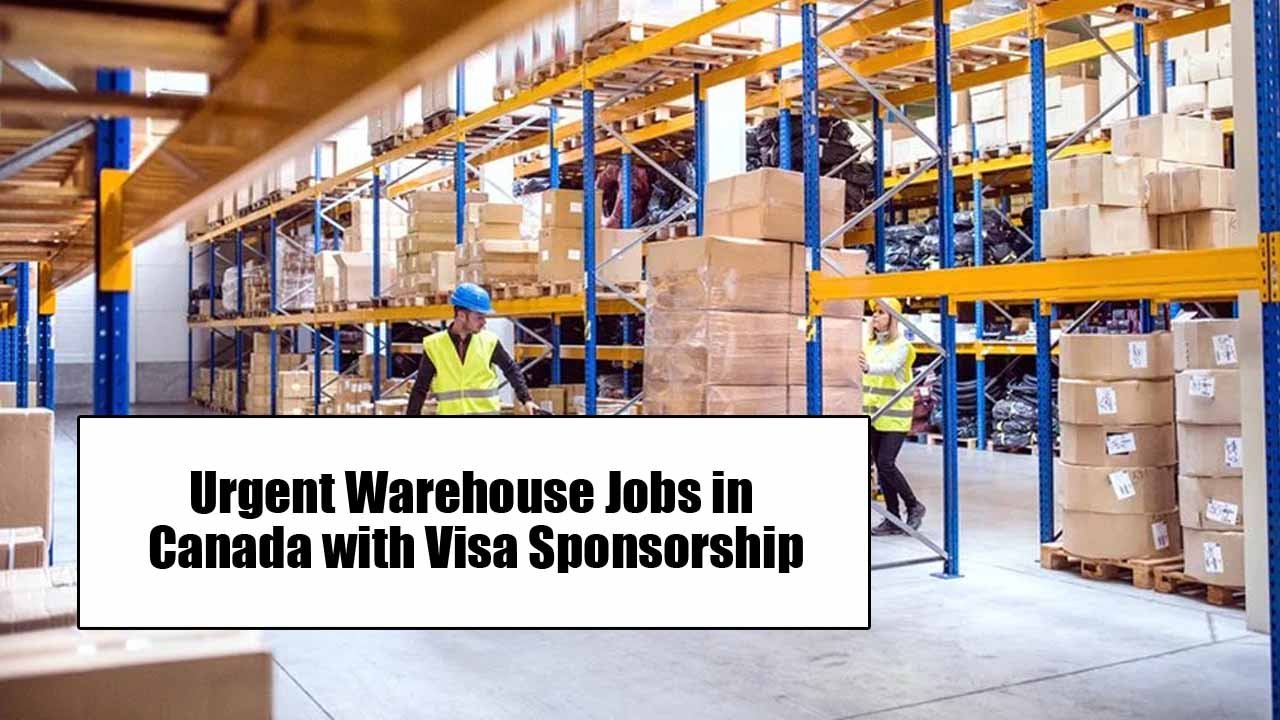
Understanding Visa Sponsorship for Warehouse Jobs in Canada
Visa sponsorship in Canada is not a myth, and it is not just for doctors or software engineers. It is a structured, government-approved mechanism that allows Canadian employers to legally bring in foreign workers when they cannot find qualified Canadians to fill positions. For warehouse jobs, the most relevant programs are the Temporary Foreign Worker Program (TFWP), the International Mobility Program (IMP), and Provincial Nominee Programs (PNPs).
The Temporary Foreign Worker Program (TFWP) and LMIA
The cornerstone of visa sponsorship for warehouse jobs in Canada is the Labour Market Impact Assessment — commonly known as the LMIA. When hiring foreign labour, Canadian firms are required to obtain this document from Employment and Social Development Canada (ESDC). It essentially certifies two things: first, that the employer genuinely tried to find a Canadian citizen or permanent resident for the job and could not; and second, that hiring a foreign worker will have a neutral or positive effect on the Canadian labour market.
An LMIA-approved job offer is essentially a golden ticket for a foreign worker. Once an employer has a positive LMIA and they extend a formal job offer to you, you can use that offer to apply for a Canadian work permit. The LMIA process typically takes between two and four months and — importantly — the cost is always paid by the employer, never the worker.
This point deserves emphasis: any employer or recruiter asking you to pay for LMIA processing is running a scam. Legitimate Canadian visa sponsorship is always free for the worker.
The International Mobility Program (IMP)
Certain categories of workers can enter Canada without an LMIA under special international agreements — for example, those covered under free trade agreements, intra-company transfers, or specific bilateral programs. In 2026, Canada has even launched a dedicated 33,000-spot pathway for H-1B holders displaced by restrictions in the United States, widening the entry doors considerably.
Provincial Nominee Programs (PNPs)
Several provinces — particularly Ontario, Alberta, and British Columbia — have specific immigration streams that prioritize warehouse workers and other supply chain roles because of critical regional shortages. If you secure a warehouse job in one of these provinces and gain Canadian work experience, you may be able to transition from a temporary work permit to a provincial nomination, which is a major step toward permanent residency.
The Atlantic Immigration Program also caters to employers in Nova Scotia, New Brunswick, Newfoundland & Labrador, and Prince Edward Island, giving smaller-market employers a streamlined pathway to recruit foreign workers.
Eligibility Requirements for Warehouse Jobs in Canada with Visa Sponsorship
One of the most attractive aspects of warehouse employment in Canada is how accessible it is to a wide range of candidates. Most positions do not require advanced education, and many employers will provide on-the-job training. That said, there are standard requirements that most employers and immigration programs look for:
Education Requirements
- A high school diploma or its equivalent is typically the minimum requirement for most warehouse positions.
- For supervisory or logistics coordination roles, some employers prefer a diploma or associate degree in supply chain, logistics, or a related field.
- No formal education is required for the majority of entry-level roles such as picker, packer, or warehouse associate.
Physical Fitness
- Warehouse work involves lifting, carrying, and standing for extended periods of time.
- Most job descriptions specify that candidates must be able to lift at least 50 pounds (approximately 23 kg) unassisted.
- Good overall physical health is both a practical and contractual requirement in most cases.
Language Proficiency
- Proficiency in English — or French for Quebec-based positions — is required to follow instructions, communicate with supervisors and colleagues, and maintain workplace safety.
- While many employers do not require formal IELTS scores, basic conversational English (equivalent to IELTS 4.5 to 5.5) is generally expected.
- Positions with French-language employers in Quebec may require demonstrated French proficiency.
Work Experience
- Many warehouse jobs are genuinely entry-level and require zero prior experience, with on-the-job training provided.
- Having previous experience in a similar logistics, manufacturing, or warehousing role will strengthen your application significantly.
- Certifications such as a forklift operator licence will put you at the front of the queue for higher-paying roles.
Other Practical Requirements
- A valid passport with sufficient validity for the work permit application.
- Clean criminal background (a police clearance certificate may be required).
- Medical examination clearance as part of the work permit application process.
- Willingness to work shifts, weekends, and overtime during peak seasons.
Top Companies Offering Warehouse Jobs in Canada with Visa Sponsorship
Knowing which employers are actively hiring and open to sponsoring foreign workers is half the battle. These are the companies with the highest volumes of warehouse openings and the strongest histories of LMIA-backed sponsorship in 2026:
Amazon Canada
Amazon operates multiple fulfillment centres across Canada — in Ontario, British Columbia, Alberta, and beyond — and they run 24/7. As one of the largest e-commerce platforms globally, Amazon Canada continuously hires warehouse workers and has a well-established track record of supporting foreign workers in roles at their distribution centres. Their warehouse associate roles are entry-level, training is provided, and compensation packages include health benefits, retirement contributions, and regular performance-based pay reviews.
Walmart Canada
Walmart operates distribution centres across multiple Canadian provinces and hires warehouse workers to manage their vast retail supply chains. They offer roles that may include visa sponsorship for qualified international workers, particularly for distribution and logistics positions in high-demand regions.
Loblaw Companies Limited
Loblaw is Canada’s largest retailer and operates an extensive network of warehouse and distribution centres supporting its grocery, pharmacy, and general merchandise operations. They actively recruit warehouse staff and have been known to provide visa sponsorship for candidates with relevant experience. Their scale means openings are frequent and geographically diverse.
FedEx Canada
FedEx is a global courier and logistics powerhouse with a strong Canadian presence. They regularly hire warehouse workers for package handling and logistics operations, and they are known to sponsor international candidates — particularly for roles in sorting facilities and large distribution hubs.
DHL Canada
DHL’s Canadian operations span supply chain management, express delivery, and freight forwarding, and their warehouse teams are among the most consistently hiring in the country. They offer structured entry points for foreign workers with LMIA-backed offers.
Canadian Tire Corporation
Canadian Tire looks for warehouse personnel to manage retail inventory and distribution, with multiple distribution centres across Ontario and other provinces. Their operations are large, structured, and frequently expanding.
Nestlé Canada
Nestlé Canada has manufacturing and warehousing facilities across the country, offering roles in packaging, inventory management, and distribution. They provide government-supported legal employment and work permits, alongside attractive salary packages that include overtime and bonuses.
Purolator
As one of Canada’s largest integrated freight and courier networks, Purolator requires warehouse workers for sorting, packaging, and freight handling at their facilities nationwide.
Maple Leaf Foods and Cargill
Both food manufacturing giants operate extensive warehousing operations tied to their production and distribution networks, with consistent labour needs and a history of hiring through LMIA-approved pathways.
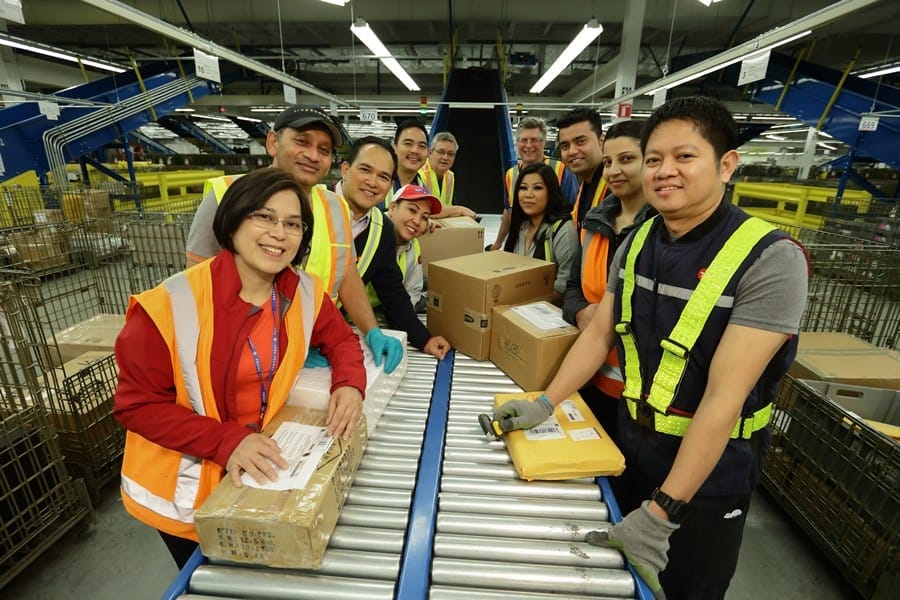
Best Provinces for Warehouse Jobs in Canada with Visa Sponsorship
Not all provinces offer the same opportunities. Geography matters enormously in Canada’s warehouse job market because demand is driven by local infrastructure, population density, and dominant industries. Here is where you should be focusing your search:
Ontario — The Top Destination
Ontario is home to Toronto and Mississauga, which together form one of North America’s most important logistics corridors. Warehouse jobs here are abundant, wages are among the highest in the country, and the sheer density of employers — Amazon, Walmart, Canadian Tire, UPS, DHL — means visa-sponsored positions are available almost year-round. The Ontario Immigrant Nominee Program (OINP) also has dedicated streams that warehouse workers can qualify for after gaining Canadian experience. Average wages in Ontario range from $17 to $25 per hour for general warehouse roles.
British Columbia — West Coast Powerhouse
Vancouver’s port status makes British Columbia a critical hub for import/export logistics. The demand for warehouse workers is strong in both urban areas like Surrey and Burnaby and in suburban distribution zones. Wages tend to be slightly higher here, reflecting the higher cost of living, with average hourly rates ranging from $18 to $26 for warehouse associates and significantly more for forklift operators and supervisors.
Alberta — Growing Fast
Calgary and Edmonton have become home to a rapidly expanding network of distribution centres. Alberta does not have a provincial sales tax (PST), which makes take-home pay effectively higher. Wages for warehouse roles range from $16 to $24 per hour at entry level, with supervisors earning substantially more. The Alberta Immigrant Nominee Program (AINP) actively recruits warehouse and logistics workers.
Manitoba and Saskatchewan — Hidden Gems
These provinces are often overlooked by international applicants, but they offer a genuine advantage: lower competition for positions and a higher likelihood of employer sponsorship because local labour pools are smaller. Winnipeg, in particular, has a growing logistics sector driven by its central geographical position within Canada’s transportation network.
Atlantic Canada — Atlantic Immigration Program Advantage
Nova Scotia, New Brunswick, Newfoundland & Labrador, and Prince Edward Island have collectively embraced the Atlantic Immigration Program (AIP) to address critical labour shortages. Warehouse workers in these provinces benefit from streamlined sponsorship processes and an easier path to permanent residency because the regional demand is high and the immigrant competition is comparatively lower.
How to Apply for Warehouse Jobs in Canada with Visa Sponsorship: Step-by-Step
The application process can feel overwhelming from the outside, but when broken down into clear steps, it is completely navigable — even without an immigration consultant, if you are diligent.
Step 1: Prepare a Canadian-Format Resume
A Canadian resume is different from what you might be used to. It should be clear, concise, ideally no more than two pages, and must not include a photo, your date of birth, or marital status (those details are not required and can actually disadvantage you due to anti-discrimination laws). Focus on your work experience in reverse chronological order, using action verbs and quantifiable achievements where possible.
Step 2: Search for LMIA-Approved Job Openings
The most reliable platforms for finding legitimate warehouse jobs in Canada with visa sponsorship include:
- Job Bank Canada(jobbank.gc.ca) — the official government job portal; positions listed here are often LMIA-approved or LMIA-eligible.
- Indeed Canada(ca.indeed.com) — large volume of listings; filter by “visa sponsorship” or search for “LMIA” in the job description.
- Glassdoor Canada— strong for company reviews and salary data alongside job listings.
- LinkedIn— particularly useful for connecting directly with HR managers and logistics recruiters in Canada.
- Company career portals— Amazon, Walmart, FedEx, DHL, and Loblaw all maintain their own career websites where warehouse positions are posted regularly.
You can also verify whether a specific employer has a valid LMIA through Service Canada’s publicly accessible database.
Step 3: Write a Targeted Cover Letter
Your cover letter should communicate three things clearly: your commitment and reliability, your physical fitness and readiness for warehouse work, and your willingness to relocate and start quickly. Employers prioritize applicants who can start quickly and have complete documentation ready. A strong subject line for your email application might read: “Application for Warehouse Worker (LMIA-Approved Visa Sponsorship) – Ready to Relocate.”
Step 4: Attach Supporting Documents
Standard documents required for a Canadian warehouse job application and subsequent work permit application typically include:
- A valid international passport (with at least 12 months of remaining validity).
- Your Canadian-format resume and cover letter.
- Educational certificates (high school diploma, vocational certifications, forklift licences, etc.).
- English or French language test results if required.
- A police clearance certificate from your home country.
- Educational Credential Assessment (ECA) report if applicable.
Step 5: Receive and Review Your Job Offer
Once an employer extends a formal written job offer, review it carefully. The offer should specify the role, salary, start date, and confirmation that the employer is pursuing or has obtained LMIA approval. Never send personal documents before receiving a formal written offer from a verified employer.
Step 6: Work Permit Application
With a positive LMIA and a job offer in hand, you can apply for a Canadian work permit through Immigration, Refugees and Citizenship Canada (IRCC). Processing times vary but are typically between a few weeks and a few months depending on your country of citizenship and the volume of applications.
For an authoritative overview of Canadian immigration programs relevant to warehouse and logistics workers, the Government of Canada’s official Immigration and Citizenship portal is the most reliable starting point for confirming program eligibility, processing times, and document requirements.
Step 7: Arrange Travel and Relocation
Many employers — particularly larger corporations like Amazon and DHL — offer some form of relocation assistance for sponsored foreign workers. This can include contributions toward airfare, temporary accommodation, and orientation support upon arrival.
Benefits and Perks Beyond the Salary
The financial case for pursuing warehouse jobs in Canada with visa sponsorship goes well beyond the hourly wage. Here is what a comprehensive employment package at a major Canadian warehouse employer typically includes:
- Extended health coverage:Many employers provide prescription drug coverage, dental care, and vision care for employees and their dependants.
- Retirement savings plans:Several large employers contribute to a Registered Retirement Savings Plan (RRSP) or similar pension arrangement.
- Paid vacation:Minimum statutory vacation entitlements in Canada range from 2 to 3 weeks per year, with many employers offering more.
- Overtime pay:Canadian labour law mandates overtime pay (typically 1.5x the regular rate) for hours worked beyond 40 per week, and some provinces set the threshold even lower.
- Shift differentials:Evening, night, and weekend shifts often attract additional pay premiums of $1 to $3 per hour above the base rate.
- Safety equipment:Employers are legally required to provide all necessary personal protective equipment (PPE), including steel-toed boots allowances, gloves, vests, and helmets.
- Employee assistance programs (EAPs):Mental health support, counselling services, and wellness programs are increasingly standard at major employers.
- Pathway to permanent residency:Perhaps the most valuable benefit of all — Canadian warehouse work experience can qualify you for the Canadian Experience Class (CEC) under the federal Express Entry system, potentially leading to permanent residency within as little as one year of full-time work.
Common Mistakes to Avoid When Applying
Many qualified international candidates sabotage their own applications — not because they lack skills, but because they make avoidable errors. Here are the most common pitfalls and how to sidestep them:
- Falling for job scams:Never pay anyone for a “guaranteed” warehouse job offer in Canada. Legitimate visa sponsorship is always employer-funded and free for the worker. If someone is asking for money — whether framed as an administrative fee, processing charge, or LMIA application cost — walk away immediately.
- Applying without verifying the employer:Before sending any personal documents, confirm that the employer is real, that their LMIA is genuine (verifiable via Service Canada), and that their contact information checks out.
- Submitting a non-Canadian resume:Sending a curriculum vitae (CV) in a format common to your home country — with photos, long personal narratives, or excessive personal details — will often get your application dismissed before it is even read.
- Targeting only Toronto and Vancouver:While these cities have the most job listings, they also attract the most competition. Consider Manitoba, Saskatchewan, New Brunswick, or Nova Scotia for a significantly better shot at sponsorship.
- Ignoring language preparation:Even if an employer does not formally require an IELTS score, demonstrating clear English communication in your cover letter and during interviews is essential.
- Underestimating the physical demands:Canadian warehouse employers take workplace safety seriously. Be honest with yourself about your physical fitness and be prepared to discuss this during your interview.
Warehouse Jobs in Canada as a Pathway to Permanent Residency
This is perhaps the aspect of Canada warehouse visa sponsorship that gets talked about least but matters most. Canada is not just offering you a job — it is potentially offering you a life.
After working in Canada for 12 months in a qualifying role, many warehouse workers become eligible to apply for permanent residency through the Canadian Experience Class (CEC) — a pathway within the federal Express Entry system that rewards candidates for their Canadian work history. Experience can also support applications through Provincial Nominee Programs (PNPs) in Ontario, Alberta, and British Columbia, as well as through special Express Entry draws that target trade and logistics workers.
Warehouse supervisors and managers, in particular, may qualify under the Federal Skilled Trades Program (FSTP) or the Federal Skilled Worker Program (FSWP), opening additional permanent residency pathways beyond the CEC.
The ability to bring your spouse or common-law partner as well as your dependent children to Canada is one of the most powerful aspects of the permanent residency pathway. Once you hold PR status, your family gains access to Canada’s world-class public healthcare system, public education for your children, and — in time — the opportunity to become Canadian citizens.
For detailed and current information on how Canadian warehouse experience can support your permanent residency application, the Immigration, Refugees and Citizenship Canada (IRCC) website provides official guidance, eligibility calculators, and the latest draw history for Express Entry.
What Life is Actually Like as a Warehouse Worker in Canada
Numbers and processes matter, but so does a realistic picture of daily life. Here is what you can genuinely expect:
Working in a Canadian warehouse typically means structured shifts — morning, afternoon, or night — in a large, climate-regulated facility. Safety standards in Canadian workplaces are enforced rigorously; employers are legally obligated to provide proper equipment, training, and hazard-free environments. Worker rights are strong, and there are clear legal channels for reporting violations.
The workforce in most major Canadian warehouses is already highly diverse, with many colleagues who are themselves immigrants or sponsored workers. This creates a natural community and social support structure for newcomers. You will find colleagues from the Philippines, India, Nigeria, the Caribbean, and dozens of other countries — people who understand exactly what it means to start fresh in a new country.
Canadian winters can be extreme, particularly in Ontario, Alberta, and Manitoba, and this is worth preparing for — both practically (warm clothing is a real investment) and mentally. However, most warehouse work is indoors, which significantly reduces weather-related hardship.
The work itself is physically demanding. Lifting, repetitive motion, and long periods on your feet are standard. But Canadian labour law mandates regular breaks, maximum lifting load guidelines are observed by serious employers, and ergonomic training is often part of your onboarding.
Career progression in Canadian warehousing is real and relatively fast for motivated workers. Many warehouse managers and logistics coordinators working in Canada today started as warehouse associates. If you show up consistently, learn quickly, and demonstrate leadership, the runway is there.
Frequently Asked Questions About Warehouse Jobs in Canada with Visa Sponsorship
Do I need experience to apply for a warehouse job in Canada with visa sponsorship? Not necessarily. Many warehouse positions are entry-level, and employers provide on-the-job training. However, having relevant experience, physical fitness, and a forklift operator’s licence (for applicable roles) will significantly strengthen your application.
How long does the LMIA and work permit process take? The LMIA process typically takes between two and four months and is managed by the employer. Once you receive a job offer backed by a positive LMIA, the work permit application can take a few weeks to a few months depending on the IRCC processing queue at the time.
Can warehouse work lead to permanent residency in Canada? Yes — and it is one of the most direct pathways available to non-trade workers. After one year of full-time warehouse work in Canada, most workers qualify to apply for permanent residency through the Canadian Experience Class (CEC) under Express Entry, or through Provincial Nominee Programs in Ontario, Alberta, or British Columbia.
What is the average annual salary for warehouse jobs in Canada? Annual salaries vary by role. General warehouse associates earn approximately $35,000 to $48,000 per year. Forklift operators and inventory clerks typically earn $48,000 to $65,000. Supervisors and logistics coordinators can earn $65,000 to over $85,000 annually, particularly in Ontario and British Columbia.
Is it possible to bring my family to Canada on a warehouse work permit? A closed work permit (tied to a specific employer) does not automatically entitle you to bring family members. However, you may be able to apply for an open work permit for your spouse under certain programs, and your children may be eligible to attend public school. Consulting an immigration lawyer or registered consultant is advisable for family planning purposes.
Which job boards should I use to find LMIA-sponsored warehouse jobs? The most reliable sources are Job Bank Canada (jobbank.gc.ca), the career portals of major employers like Amazon, Walmart, FedEx, and DHL, Indeed Canada (ca.indeed.com), and LinkedIn. Always verify any listing before applying and never pay any fees.
Is This the Right Opportunity for You?
If you are a motivated, physically capable individual who is ready to work hard, adapt to a new environment, and build something meaningful for yourself and your family, then warehouse jobs in Canada with visa sponsorship in 2026 represent one of the most realistic, accessible, and genuinely rewarding opportunities available to foreign workers anywhere in the world right now.
The demand is real. The wages are competitive. The visa sponsorship infrastructure is government-backed. The pathway to permanent residency is open. And the diversity of the Canadian workforce means you will not be alone on this journey.
What it comes down to is action. Research the companies that are hiring, prepare your Canadian-format resume, apply through verified channels, stay alert to scams, and be ready to seize the moment when a legitimate offer comes through. Thousands of foreign nationals have already walked this path and built thriving lives in Canada doing exactly what you are reading about right now.
The warehouse door is open. It is time to walk through it.