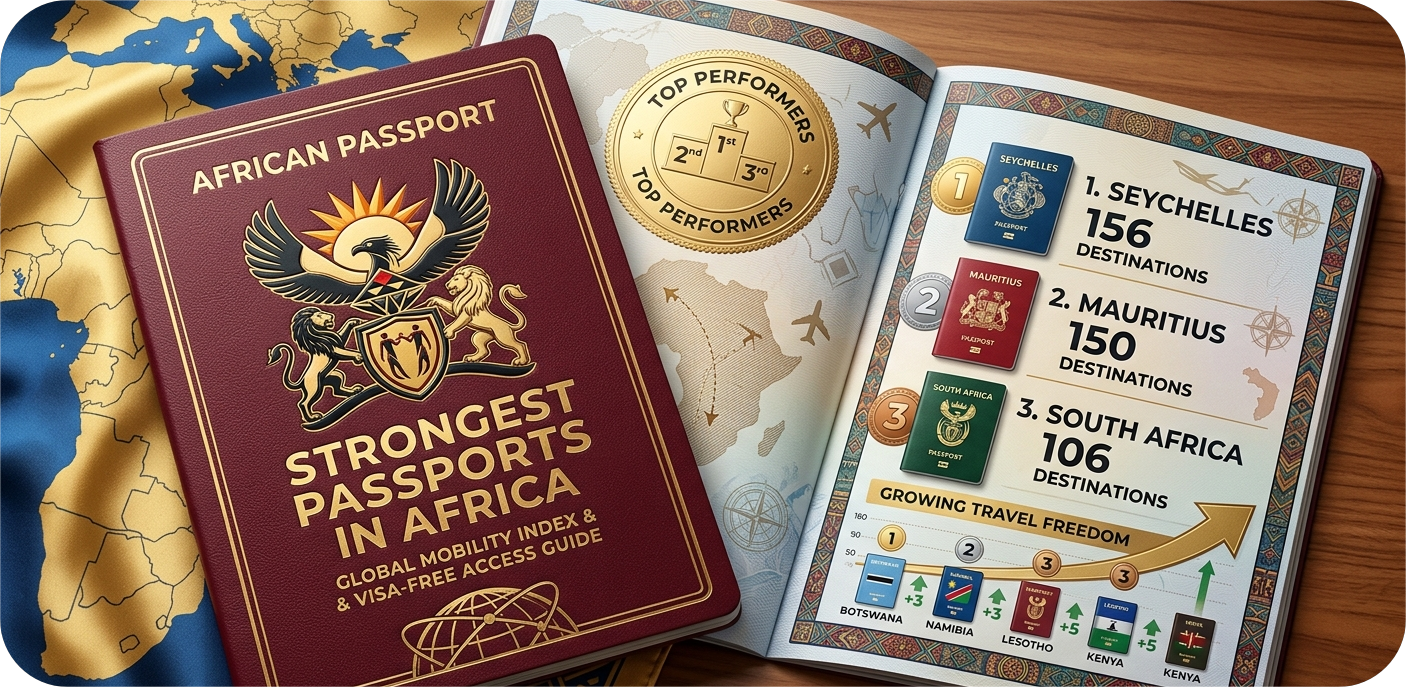
Introduction: Why the Strongest African Passports Matter More Than Ever in 2026
In today’s fast-changing world, your passport is no longer just a simple booklet for crossing borders—it has become a powerful symbol of freedom, opportunity, and global access. For many people, especially in Africa, a passport can determine how easily you can explore new countries, access better education, secure international jobs, or even relocate for a better quality of life. It’s not just about travel anymore; it’s about possibility.
Think about it for a moment: two individuals with the same qualifications, skills, and ambitions may have completely different global experiences simply because of the strength of their passports. One might travel seamlessly across continents with minimal restrictions, while the other faces lengthy visa applications, high rejection risks, and costly processes. This gap highlights why discussions around passport strength have become increasingly important.
In recent years, the conversation around the strongest African passports, African passport ranking, and visa-free countries Africa has grown significantly. More Africans are becoming globally mobile—seeking education abroad, remote work opportunities, business expansion, and migration pathways. As a result, people are paying closer attention to how their nationality impacts their ability to move freely across borders.
By 2026, mobility is no longer a luxury—it is a key driver of economic empowerment and personal development. Countries with stronger passports often enjoy better diplomatic relationships, more stable economies, and higher levels of global trust. These factors translate into greater visa-free access for their citizens, making international travel smoother and more accessible.
For example, having access to visa-free or visa-on-arrival destinations means you can:
- Travel spontaneously without long waiting periods
- Save money on visa application fees
- Explore business opportunities in multiple countries
- Attend international conferences, events, or interviews with ease
- Build a truly global network
On the other hand, weaker passports often come with limitations that can slow down progress. Lengthy visa procedures, strict documentation requirements, and frequent rejections can discourage even the most determined travelers. This reality has pushed many Africans to actively seek ways to improve their global mobility—whether through dual citizenship, relocation programs, or strategic career moves.
This is why a key question continues to trend: Which country holds the best passport in Africa? The answer goes beyond just numbers. While rankings are typically based on the number of visa-free destinations, they also reflect deeper factors such as international relations, governance, and economic stability.
More importantly, understanding these rankings helps you make smarter decisions. Whether you’re choosing where to study, planning long-term travel, or considering relocation, knowing how different African passports compare can give you a significant advantage.
Ultimately, your passport is more than an identity document—it is a gateway to global freedom. And in a world where borders still define opportunity, understanding the power behind that small booklet could be one of the most important decisions you make for your future.
According to global mobility benchmarks like the Henley Passport Index, African passport strength is determined by the number of destinations accessible without a visa or with visa-on-arrival access. For deeper insights into how rankings are calculated, you can explore the methodology on the Henley Passport Index.
Let’s break it all down.

What Determines the Strongest African Passports in 2026?
Before diving into the African passport ranking 2026 list with visa-free countries comparison, it’s important to understand what makes a passport “strong.”
Key Factors:
- Visa-free access to global destinations
- Visa-on-arrival privileges
- Electronic travel authorization (eTA) options
- Diplomatic relations and international agreements
- Global trust and political stability
In simple terms, the more countries you can visit without complicated visa processes, the stronger your passport.
Top 10 Strongest African Passports in 2026 (Visa-Free Access Revealed)
Below is a well-structured comparison table showing the top strongest African passports in 2026 with visa-free access.
| Rank | Country | Visa-Free / Visa-on-Arrival Access | Global Strength Insight |
|---|---|---|---|
| 1 | Seychelles | 150+ countries | Africa’s most powerful passport |
| 2 | Mauritius | 145+ countries | Strong global mobility |
| 3 | South Africa | 105+ countries | Leading mainland passport |
| 4 | Botswana | 90+ countries | Stable diplomatic ties |
| 5 | Namibia | 85+ countries | Growing travel access |
| 6 | Lesotho | 80+ countries | Regional mobility advantage |
| 7 | Eswatini | 78+ countries | Consistent ranking |
| 8 | Kenya | 75+ countries | East Africa leader |
| 9 | Malawi | 72+ countries | Increasing visa agreements |
| 10 | Tanzania | 70+ countries | Expanding travel reach |
Strongest African Passports: Detailed Country Breakdown
1. Seychelles – The Undisputed Leader
When asking “Which African passport has the most visa-free countries in 2026?”, Seychelles consistently comes out on top.
Why it ranks #1:
- Extensive visa-free access across Europe and Asia
- Strong diplomatic relations
- High global mobility index score
For official travel insights and visa policies, you can check the IATA Travel Centre.
2. Mauritius – A Close Contender for Best Passport in Africa
Mauritius combines economic strength and global openness, making it one of the best African passports for visa-free travel and relocation 2026.
Key Advantages:
- Access to major global economies
- Investor-friendly environment
- Strong international partnerships
3. South Africa – The Most Influential Mainland Passport
South Africa remains a dominant player in the African passport ranking 2026.
Highlights:
- Strong travel access within Africa and beyond
- Economic influence boosts passport credibility
4–10: Rising African Passports to Watch
Countries like Botswana, Namibia, and Kenya are steadily improving their rankings due to:
- Increased bilateral agreements
- Regional integration
- Tourism-driven diplomacy
Visa-Free Countries Africa: What It Means for You
Understanding visa-free countries Africa is critical for anyone considering:
- Travel
- Migration
- Remote work opportunities
Types of Access Explained:
- Visa-Free: No visa required
- Visa-on-Arrival: Get visa at destination
- eVisa: Apply online
Best African Passports for Travel and Relocation in 2026
If your goal is relocation or global mobility, here’s what to look for:
Top Considerations:
- Number of visa-free destinations
- Access to developed countries
- Ease of residency pathways
Best Picks:
- Seychelles (for global access)
- Mauritius (for relocation opportunities)
- South Africa (for regional influence)
African Passport Ranking 2026: Key Insights You Can’t Ignore
Let’s take a closer look at the African passport ranking 2026 list with visa-free countries comparison and what it reveals about mobility, influence, and opportunity across the continent.
Key Trends Explained
- Island nations dominate rankings
Countries like Seychelles and Mauritius consistently top the list, not because of size or population, but due to their strategic global relationships. These nations have prioritized international cooperation, tourism, and open-border policies, which translate into extensive visa-free access. Their smaller size has, in many ways, allowed them to be more agile in forming diplomatic agreements that benefit their citizens. - Diplomatic ties matter more than geography
A country’s location alone does not determine passport strength. Instead, it is the quality of its diplomatic relationships that plays a bigger role. Nations that actively engage in bilateral agreements, trade partnerships, and international collaboration tend to secure more visa waivers. This shows that foreign policy and global trust are key drivers of mobility. - Economic stability boosts passport power
Stronger economies often lead to stronger passports. Countries with stable financial systems, low migration risk, and solid governance are viewed more favorably on the global stage. This perception increases their citizens’ access to visa-free destinations, reinforcing the connection between economic strength and travel freedom.
Together, these trends highlight that passport power is not accidental—it is strategically built over time.
Why Some African Passports Are Still Weak
While discussing the strongest African passports, it’s equally important to understand why others lag behind.
Common Challenges:
- Limited diplomatic agreements
- Political instability
- Economic constraints
- Security concerns
How to Maximize Your Passport Power in 2026
Even if your passport isn’t among the strongest, you can still expand your travel opportunities.
Smart Strategies:
- Apply for dual citizenship
- Explore residency-by-investment programs
- Leverage regional travel agreements (ECOWAS, AU)
Future Outlook: African Passport Strength Beyond 2026
Looking ahead to 2027 and beyond:
Expected Trends:
- Increased visa waivers across Africa
- Stronger regional integration
- Digital travel systems (e-visas expansion)
Africa is gradually moving toward greater mobility and global integration.
FAQs: Strongest African Passports & Visa-Free Travel
Understanding the realities behind the strongest African passports, African passport ranking, and access to visa-free countries Africa can help you make smarter travel and migration decisions. Below are expanded answers to some of the most common and important questions.
1. Which African passport is the strongest in 2026?
As of 2026, Seychelles holds the top position as the strongest African passport. This ranking is largely due to its impressive number of visa-free and visa-on-arrival destinations, which exceeds most other countries on the continent.
What makes Seychelles stand out is not just the number of countries its citizens can access, but the quality of those destinations. Passport holders enjoy relatively easy entry into parts of Europe, Asia, and other global regions that are typically harder to access for many African nationals.
Another important factor is Seychelles’ strong diplomatic relationships and stable political environment, which contribute to global trust. This trust plays a key role in determining whether countries are willing to grant visa-free access.
In essence, Seychelles represents what many countries aim for: a passport that offers freedom, flexibility, and global reach.
2. What is the best passport in Africa for travel?
When it comes to identifying the best passport in Africa for travel, Mauritius and Seychelles consistently lead the conversation. These two countries have built reputations for offering their citizens exceptional travel freedom.
Mauritius, in particular, is often praised for its balanced combination of:
- Visa-free access to major global destinations
- Strong economic performance
- Favorable international relations
Seychelles, on the other hand, edges ahead slightly due to a higher number of accessible destinations and broader global coverage.
However, the “best” passport can also depend on your personal goals. For example:
- If your focus is business travel, access to economic hubs matters
- If you’re interested in tourism, broader regional access may be enough
- If relocation is your goal, you may prioritize countries with residency pathways
Ultimately, both Mauritius and Seychelles offer some of the most powerful passports in Africa, making them top choices for global mobility.
3. How many visa-free countries can African passports access?
The number of visa-free countries Africa passport holders can access varies significantly depending on the country. In 2026, the range is quite wide:
- Top-tier passports (e.g., Seychelles, Mauritius): 140–150+ destinations
- Mid-tier passports (e.g., South Africa, Kenya): 70–100 destinations
- Lower-tier passports: Often below 70 destinations
It’s important to note that “access” includes:
- Visa-free travel
- Visa-on-arrival
- Electronic travel authorizations (eTA)
This variation highlights the gap in global mobility across the continent. While some African citizens enjoy relatively seamless travel experiences, others still face strict visa requirements, long processing times, and higher rejection rates.
That said, there has been gradual improvement over the years, with more countries signing agreements to expand travel access.
4. Can Africans travel visa-free to many countries?
Yes, Africans can travel visa-free to a number of countries, especially within the continent. Regional agreements, such as those within West Africa and parts of East and Southern Africa, have made it easier for citizens to move across borders without visas.
However, compared to passports from Europe or North America, African passports generally have more limitations. Access to highly developed countries—such as those in North America or parts of Europe—often still requires visas for most African nationals.
That said, the situation is gradually improving. Many countries are:
- Expanding visa-on-arrival options
- Introducing eVisa systems
- Strengthening regional travel agreements
For travelers, this means more opportunities than before, even if challenges still exist.
5. Will African passport rankings improve in 2027?
There is strong reason to believe that African passport rankings will continue to improve in 2027 and beyond. Several key developments are driving this positive outlook:
- Regional integration efforts: Initiatives like the African Continental Free Trade Area (AfCFTA) are encouraging easier movement across borders.
- Digital transformation: More countries are adopting eVisa systems, reducing barriers to entry.
- Diplomatic expansion: African nations are increasingly forming new bilateral agreements to boost travel access.
- Economic growth: As economies strengthen, global confidence increases, which can lead to more visa-free agreements.
While progress may be gradual, the overall trend is moving toward greater mobility and fewer restrictions. Governments are beginning to recognize that improving passport strength is not just about travel—it’s about unlocking economic and social opportunities for their citizens.
Final Thought on FAQs
The landscape of African passport ranking 2026 shows both progress and potential. While there are still disparities, the direction is encouraging. For individuals, staying informed about these changes can make a real difference—whether you’re planning a trip, exploring international careers, or thinking about long-term relocation.
In a world where mobility equals opportunity, understanding your passport’s power is one of the smartest moves you can make.
Conclusion: Why You Should Care About African Passport Rankings
The reality is simple—your passport can shape your future in more ways than most people realize. In an increasingly interconnected world, where opportunities are no longer confined by geography, the strength of your passport determines how easily you can access those opportunities. It influences where you can go, how quickly you can move, and what possibilities are realistically within your reach.
Understanding the strongest African passports, the African passport ranking, and access to visa-free countries Africa gives you a powerful strategic advantage. It allows you to think beyond limitations and plan your life with a global perspective.
1. Travel Freedom and Convenience
One of the most immediate benefits of a strong passport is the ease of travel. With greater visa-free access, you can:
- Explore new destinations without lengthy visa processes
- Travel spontaneously for leisure or emergencies
- Save time and money otherwise spent on visa applications
This level of freedom is not just convenient—it’s empowering. It allows you to experience the world on your own terms.
2. Expanded Career Opportunities
In today’s global job market, mobility is a major advantage. Many career opportunities—especially in international business, tech, healthcare, and academia—require the ability to travel or relocate quickly. A stronger passport can:
- Give you access to job markets in multiple countries
- Make it easier to attend interviews, training, and conferences abroad
- Increase your chances of securing international roles
Employers are increasingly valuing candidates who can move across borders with ease, and your passport plays a silent but crucial role in that.
3. Smarter Migration Planning
If you’re considering relocating for better opportunities, understanding passport rankings becomes even more critical. Countries with stronger passports often have:
- Better diplomatic relationships
- Easier pathways to residency or citizenship
- Stronger global reputations
By studying the African passport ranking 2026 list with visa-free countries comparison, you can identify which countries offer better mobility and long-term benefits. This knowledge can guide decisions such as where to study, work, or even invest.
4. Access to Global Networks and Opportunities
A strong passport doesn’t just help you move—it helps you connect. It opens doors to:
- International business partnerships
- Global education systems
- Cultural exchange and collaboration
These connections can significantly impact your personal and professional growth, giving you exposure to ideas, markets, and experiences that may not be available locally.
5. A Shift in Global Reality
As 2026 unfolds, one thing is becoming increasingly clear: passport strength is evolving into a form of global currency. Just like financial assets, it determines your level of access in the world. Countries are forming strategic alliances, expanding visa-free agreements, and strengthening diplomatic ties—all of which directly impact their citizens’ mobility.
For individuals, this means that being informed is no longer optional—it’s essential. The gap between strong and weak passports continues to influence everything from travel experiences to life-changing opportunities.
So whether you’re planning your next trip, pursuing international education, exploring remote work, or seriously considering relocation, now is the time to pay attention to these rankings. The insights you gain today can shape the decisions you make tomorrow.
Because in a world where access is everything, understanding passport power isn’t just useful—it’s necessary. And when it comes to your future, this is one detail you truly can’t afford to ignore.